Smoking, tobacco and cancer
The best way to stop smoking is to use free professional support from your local stop smoking service and tools to help with cravings and withdrawal. You're more likely to give up smoking for good with their help. Stopping smoking (sometimes called smoking cessation) is the best thing you can do for your health.
Stop smoking services offer a range of help including: • Free 1 to 1 or group support sessions where a trained advisor can support you to stop smoking. • Providing stop smoking treatment to help control cravings. • Providing or advising on switching to e-cigarettes. Stop smoking services may be in person, by telephone or online. You can contact your free local service for details.
Find your free local stop smoking serviceIf you don't want to use a stop smoking service or you’re not able to, you can also get help with stopping smoking from:
•The NHS Quit Smoking app for smartphones •The NHS Smokefree online community forum on Facebook •A GP or pharmacist
• Medications to reduce cravings and withdrawal symptoms. • Nicotine replacement products such as patches and gums to help with nicotine cravings. • E-cigarettes (‘vapes’), which make a vapour containing nicotine that you can breathe in.
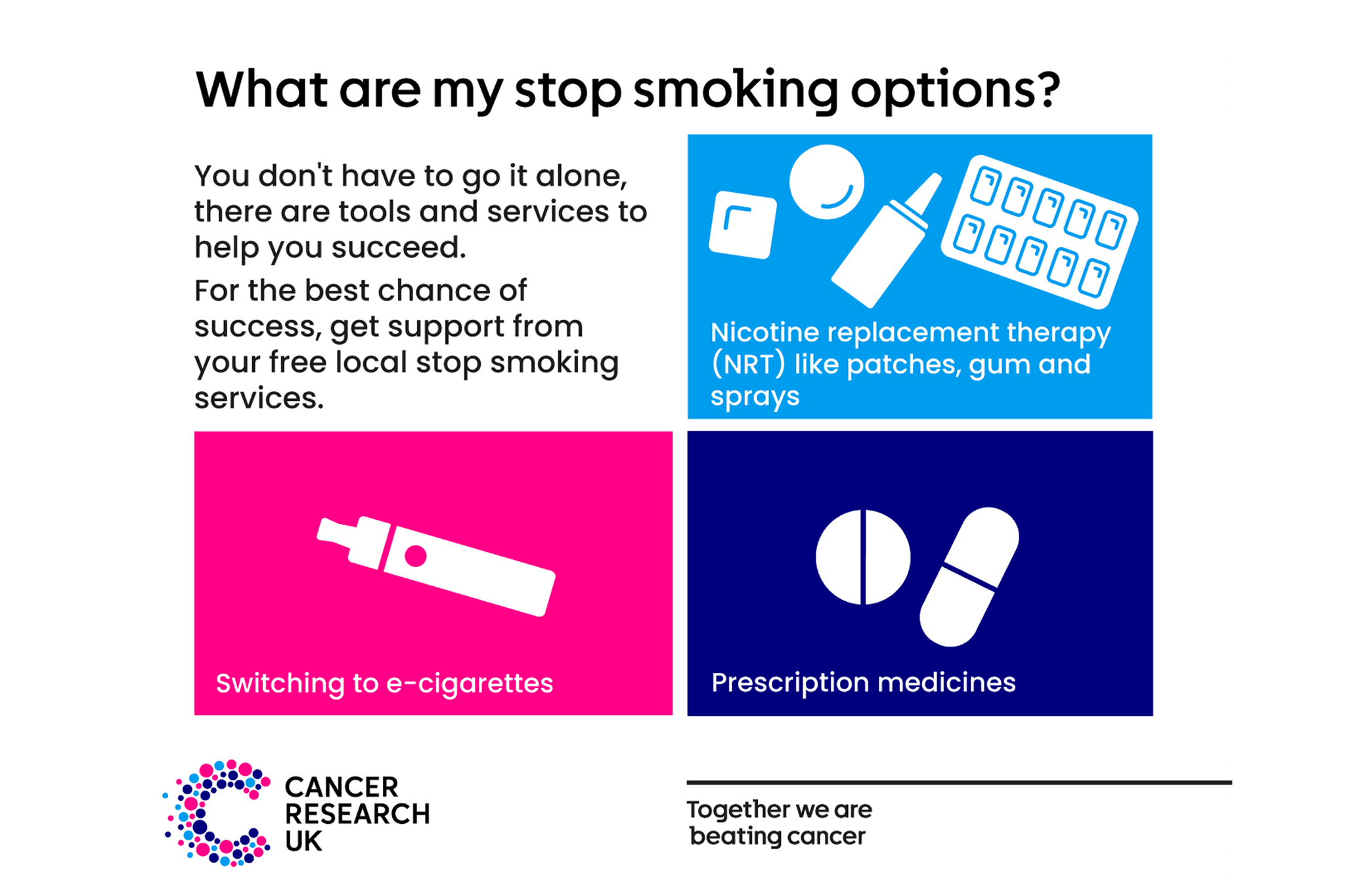
Everyone’s different, so find the tool or combination that works best for you. Stop smoking advisors, GPs or pharmacists can help you choose and tell you how to use them. If one tool or combination doesn’t suit you, ask for advice on alternatives. It might take a few attempts before you stop smoking for good. Keep trying and use specialist support to help you. Nicotine is the chemical in tobacco that makes smoking so addictive. Your body gets used to getting nicotine from tobacco. When you stop smoking you may get withdrawal symptoms at first like cravings or feeling restless. Stop smoking tools can help you control cravings and other withdrawal symptoms. Whichever tool you’re using, there’s support to help you use it most effectively. Make sure you follow any professional advice and the manufacturer’s instructions.
• Stop smoking medicines can reduce your cravings and help with nicotine withdrawal symptoms. You can read more about prescription stop smoking medicines on the NHS website. • They’re available on prescription from a doctor or some free local stop smoking services.
• NRT gives you nicotine to help with cravings without the harmful chemicals in tobacco smoke. • There are lots of different types including nasal sprays, gums and patches. • NRT is available on prescription, or to buy over the counter at a pharmacy or supermarket.
• E-cigarettes (‘vapes’) are electronic devices that deliver nicotine in a vapour that you inhale. • They can help with cravings but don’t contain tobacco, the harmful substance in cigarettes. Research so far shows that they’re far less harmful than smoking. • You can buy them from specialist vape shops, some pharmacies, supermarkets and convenience stores. They may also be available free of charge through some stop smoking services.
There are lifelong benefits to stopping smoking, but it can be difficult at first. The nicotine in tobacco is addictive, so you may get uncomfortable withdrawal symptoms without it. These can include: • Feeling depressed, anxious, irritable, restless or hungry • Poor concentration • Poor sleep at night • Urges to smoke • Feeling unwell • Headaches
Everyone’s different, so there’s no guaranteed timeline for smoking withdrawal symptoms. They usually peak during the first few days after your last cigarette and then ease over 2 to 4 weeks. The type and timing of symptoms can vary. If you normally have a cough caused by smoking, you might notice this gets worse at first. Stop smoking tools can ease withdrawal symptoms. Specialist support can help you to cope with them until they pass.
Some people who smoke may gain weight after stopping. Some studies have found that people gain around 4-5kg during the next year. But not everyone gains weight when they stop smoking. In the longer-term, people who stop smoking generally have a similar weight to people who have never smoked. Concern about gaining weight is understandable. Talk to your doctor or nurse if you have any questions about your weight. We have tips on managing your weight on our website. If you smoke, stopping is the best thing you can do for your health.
It’s never too late to stop smoking. The benefits include improving your physical and mental health and saving money:
Cut your cancer risk. Stopping smoking reduces your risk of at least 16 types of cancer, including lung cancer.
Lower your risk of lung and heart conditions. Including heart attack, stroke and chronic obstructive pulmonary disease (COPD).
Feel healthier. Stopping smoking could help you feel better in your daily life. Many people report breathing more easily and that they have more energy.
Improve your mental wellbeing. Any positive feelings from smoking a cigarette only last for a short time. Stopping can lower depression, anxiety, and stress in the long term.
Protect your friends and family from passive smoking. There is no safe level of second-hand smoke. It’s particularly dangerous for children and those who are pregnant.
Healthier appearance. Smoking can damage the skin and make it look grey. Stopping can help reverse this. Giving up smoking also stops your teeth becoming stained.
Save money. Smoking can cost thousands of pounds a year. What else could you use that money for?
We know that stopping smoking can be hard. Smoking can be part of a well-established routine, which can be difficult to break. But thousands of people stop smoking every year in the UK, and you can do it too! Here are our top tips to get you started.
Making a plan increases your chances of doing something. Choose a date when you will stop smoking and stick to it. Get any stop smoking tools ready and remove things like cigarettes and lighters. For situations that you might find difficult, plan what actions you’ll take to help yourself. For example, if you’re socialising with people who smoke.
Although it is hard, you don’t need to go it alone. As well as talking to professionals, think about who else in your life you could ask for help. For example, tell friends and family you’re stopping smoking. They can encourage you and celebrate your smokefree milestones.
It takes most people a few tries before they manage to stop smoking for good. If you don’t succeed at first, think about what worked, what didn’t, and what you could do next time. Your stop smoking service, doctor or pharmacy can help you find a method that works for you. Remind yourself of your reasons for wanting to stop smoking and how it will benefit you. Try leaving sticky notes for yourself or setting reminders on your phone.
If you tend to smoke at certain times, try to break the link between those times or activities and smoking. For example, if you normally smoke after a meal, try going for a walk or doing something else you enjoy instead. Even with stop smoking tools, you’ll probably still feel the urge to smoke sometimes. Try distracting yourself. For example, exercise, watch TV, contact a friend or read. It may help to hold something in the hand that normally holds your cigarette.
Last reviewed: 22 Jul 2026
Next review due: 22 Jul 2029



