Radiotherapy
Your doctor will suggest radiotherapy to the brain if you have small cell lung cancer with limited disease, and:
you are well enough
your cancer has responded to chemotherapy and radiotherapy (first line treatment)
You usually have up 10 treatments.
Some people with small cell lung cancer who have extensive disease might also be offered PCI. Research shows better outcomes for people with limited disease.
You usually have a planning CT scan in the radiotherapy department.
The scan shows the cancer and the area around it. You might have other types of scans or x-rays to help your treatment team plan your radiotherapy. The plan they create is just for you.
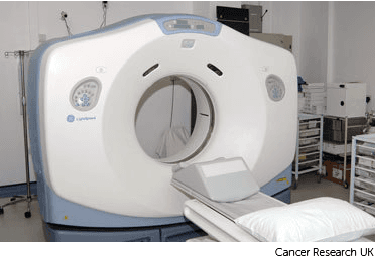
Your radiographers tell you what is going to happen. They help you into position on the scan couch. You might have a type of firm cushion called a vacbag to help you keep still.
The CT scanner couch is the same type of bed that you lie on for your treatment sessions. You need to lie very still. Tell your radiographers if you aren't comfortable.
You might need an injection of contrast into a vein in your hand. This is a dye that helps body tissues show up more clearly on the scan.
Before you have the contrast, your radiographer asks you about any medical conditions or allergies. Some people are allergic to the contrast.
Once you are in position your radiographers put some markers on your skin. They move the couch up and through the scanner. They then leave the room and the scan starts.
The scan takes about 5 minutes. You won't feel anything. Your radiographers can see and hear you from the CT control area where they operate the scanner.
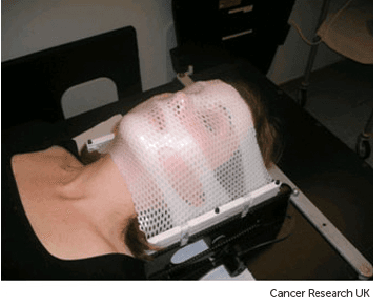
You might need to have a radiotherapy mask or mould made before you start treatment. They can also be called shells.
They keep the treatment area of your body still each time you have your radiotherapy. This is so your treatment is as accurate as possible.
You can see through most types of masks or moulds, as they usually have lots of small holes. Your radiographers might make marks on them. They use the marks to accurately line up the radiotherapy machine for each treatment. It is important that you are in exactly the same position each time.
It takes between 10 to 45 minutes to make a mask or mould.
The mask is normally made directly against your skin. It's helpful to wear clothing that you can easily take off. You also need to take off any jewellery from that area.
Having a lot of facial hair can make it difficult to make a head and neck mask. The radiotherapy staff will advise you about any hair issues at your planning session.
A mould technician or radiographer makes the mask in the mould room of the radiotherapy department or during your CT planning scan.
The process of making a mask can vary slightly between hospitals. Most often they use a special kind of plastic heated in warm water or an oven so that it becomes soft and pliable. Your technician puts the plastic mesh on to your face so that it moulds to fit your face exactly. It feels a little like having a warm flannel put onto your face. You can still breathe easily, as the plastic has lots of holes in it.
After a few minutes the plastic mesh becomes hard. Your technician takes the mask off. It is then ready for use.
Radiotherapy machines are very big and could make you feel nervous when you see them for the first time. The machine might be fixed in one position. Or it might rotate around your body to give treatment from different directions. The machine doesn't touch you at any point.
Before your first treatment, your will explain what you will see and hear. In some departments, the treatment rooms have docks for you to plug in your phone or personal device. So you might be able to listen to an audiobook, a podcast or music during the treatment.
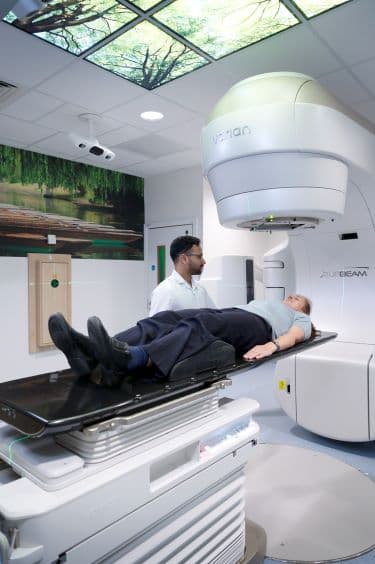
Your radiographers help you to get into position on the radiotherapy table. If you need to wear a mask for your radiotherapy, they will position the mask over your face and attach it to the table. The mask keeps your head completely still while you have treatment.
You need to lie very still. Your radiographers might take images (x-rays or scans) before your treatment. This is to make sure that you're in the right position. The machine makes whirring and beeping sounds. You won’t feel anything when you have the treatment.
Your radiographers can see and hear you on a CCTV screen in the next room. They can talk to you over an intercom and might ask you to hold your breath or take shallow breaths at times. You can also talk to them through the intercom or raise your hand if you need to stop or if you're uncomfortable.
This type of radiotherapy won't make you radioactive. It's safe to be around other people, including pregnant women and children.
You might have to travel a long way each day for your radiotherapy. This depends on where your nearest cancer centre is. This can make you very tired, especially if you have side effects from the treatment.
You can ask your radiographers for an appointment time to suit you. They will do their best, but some departments might be very busy. Some radiotherapy departments are open from 7 am till 9 pm.
Car parking can be difficult at hospitals. Ask the radiotherapy staff if you are able to get free parking or discounted parking. They may be able to give you tips on free places to park nearby.
Hospital transport may be available if you have no other way to get to the hospital. But it might not always be at convenient times. It is usually for people who struggle to use public transport. Or who have any other illnesses or disabilities. You might need to arrange hospital transport yourself.
Some people are able to claim back a refund for healthcare travel costs. This is based on the type of appointment and whether you claim certain benefits. Ask the radiotherapy staff for more information about this and hospital transport.
Some hospitals have their own drivers and local charities might offer hospital transport. So do ask if any help is available in your area.
Radiotherapy to the brain can cause side effects. Let your doctor, nurse or radiographer know about any side effects that you have. Then they can find ways to help you.
Side effects usually get worse around the second week of treatment and will be at their worst at the end or just after your treatment course.
They generally last a number of weeks. Some might last for a few months after the treatment has finished.
There is a small chance that radiotherapy will affect your brain. Some people might have problems with memory, movement, or the ability to think or reason (cognitive function). If you are worried about this, talk to your doctor.
Last reviewed: 13 Oct 2025
Next review due: 13 Oct 2028
Your treatment depends on several factors. These include what type of lung cancer you have, how big it is and whether it has spread (the stage). It also depends on your general health.
A team of health professionals decides what treatment you might need. They also decide what treatment options you have. The type of treatment you have for small cell lung cancer will depend on the stage of your cancer.
There is support available during and after treatment to help you cope. This includes support from your clinical nurse specialist, cancer charities, community services, and family and friends.
Current research is looking at ways to improve the diagnosis and treatment of lung cancer.
Lung cancer starts in the windpipe (trachea), the main airway (bronchus) or the lung tissue. Cancer that starts in the lung is called primary lung cancer.



