Treatment for Oesophageal Cancer
Targeted cancer drugs work by targeting the differences in cancer cells that help them to grow and survive. Other drugs help the to attack cancer. They are called immunotherapies.
Some drugs work in more than one way. So they are targeted as well as working with the immune system.
The main targeted drugs and immunotherapy for oesophageal cancer are:
nivolumab (Opdivo)
pembrolizumab (Keytruda)
trastuzumab (Herceptin or Ontruzant)
Whether you have targeted therapy depends on:
the type of oesophageal cancer you have
how far the cancer has grown (the stage)
other treatments you've already had
whether your cancer has changes (mutations) in certain proteins or genes
Read about the stages, types and grades of oesophageal cancer
Your doctor might test your cancer cells for particular proteins. This can help to show whether certain drug treatments might work for your cancer.
To test your cancer cells, your specialist needs a sample (biopsy) of your cancer. They might have tested your cancer cells when you were first diagnosed. Or they might be able to test some tissue from a biopsy or operation you have already had.
In some cases, you might need to have a second biopsy.
To help decide on treatment for your oesophageal cancer, your doctor may look for:
large amounts of a protein called HER2 receptor (HER2 positive cancer)
large amounts of a protein called PD-L1 (PD-L1 positive cancer)
Nivolumab is a type of immunotherapy called a checkpoint inhibitor. It works by blocking the PD-L1 protein. This stops the immune system from working properly and attacking cancer cells. It helps to make your immune system find and kill cancer cells.
You might have nivolumab on its own if:
you still had cancer following chemoradiotherapy and you have now had surgery to completely remove the cancer
or you have squamous cell cancer that has come back or spread to other parts of the body, and you have already had chemotherapy
You might have nivolumab with chemotherapy if:
you have advanced adenocarcinoma or squamous cell cancer
your cancer is PD-L1 positive
you haven't had any other treatment for advanced cancer
Pembrolizumab is a type of immunotherapy called a checkpoint inhibitor. It stimulates the body's immune system to fight cancer cells.
It targets and blocks a protein called PD-1 on the surface of certain immune cells called T-cells. Blocking the PD-1 protein triggers the T-cells to find and kill cancer cells.
You might have pembrolizumab with chemotherapy for oesophageal cancer if:
you can’t have surgery or your cancer is advanced
your cancer is PD-L1 positive
your cancer is HER 2 negative (low levels of the HER2 receptor)
you haven't had any other treatment for advanced cancer
Find out more about pembrolizumab
Trastuzumab has the brand name Herceptin. Or you might have a biosimilar such as Ontruzant. A biosimilar is a very similar copy of the original drug, but it is not exactly the same. Biosimilars undergo strict testing to check they work just as well as the original drug.
Trastuzumab is a monoclonal antibody. Monoclonal antibodies work by attaching to proteins on or in cancer cells.
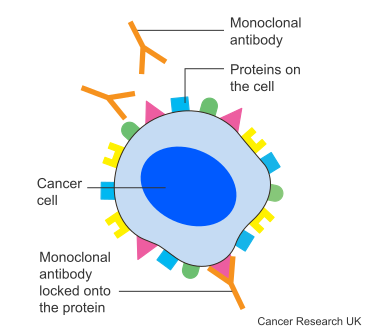
Human epidermal growth factor receptor 2 (HER2) is a protein that makes cells grow and divide.
Trastuzumab works by locking onto HER2 in the cancer cells. It both stops them from growing and kills them. Trastuzumab only works if your cancer is HER2 positive.
You might have it with chemotherapy for advanced cancer if:
you have oesophageal adenocarcinoma
your cancer is HER2 positive
you haven't had any other treatment for advanced cancer
Find out more about trastuzumab
You have your treatment through a tube into your bloodstream.
You have this treatment through a drip into your arm. A nurse puts a small tube (a cannula) into one of your veins and connects the drip to it.
You may need a central line. This is a long plastic tube that gives the drugs into a large vein, either in your chest or through a vein in your arm. It stays in while you’re having treatment, which may be for a few months.
The side effects of targeted and immunotherapy cancer drugs are different depending on the drug you’re having. Not everyone gets all side effects.
The side effects you have depend on:
which drug you have
whether you have it alone or with other drugs
the amount of drug you have (the dose)
your general health
A side effect may get better or worse during your course of treatment. Or more side effects may develop as the treatment goes on. For more information about the side effects of your treatment, go to the individual drug pages.
Researchers are looking at different types of targeted and immunotherapy drugs for oesophageal cancer. Some of these are used to treat other cancers and some are new.
They are looking at these drugs on their own or combined with other treatments.
Read more about research into oesophageal cancer
Treatment for oesophageal cancer can be difficult to cope with. Tell your doctor or nurse about any problems or side effects you have. Your nurse will give you numbers to call if you have any problems at home.
Last reviewed: 21 Sept 2023
Next review due: 21 Sept 2026
You might have surgery, radiotherapy or chemotherapy or a combination of these treatments. This depends on a number of factors including the stage and type of your oesophageal cancer.
The stage of a cancer tells you how big it is and whether it has spread. It helps your doctor to know which treatment you need.
Chemotherapy uses anti cancer drugs to destroy cancer. You might have it before or after surgery for oesophageal cancer, or as your main treatment if your cancer is advanced.
There is support available to help you cope during and after oesophageal cancer treatment. This includes diet tips to help you eat well.
Coping with cancer can be difficult. Help and support are available. There are things you can do and people who can help you cope with a diagnosis of oesophageal cancer.
Oesophageal cancer starts in the food pipe, also known as your oesophagus or gullet. The oesophagus is the tube that carries food from your mouth to your stomach.

About Cancer generously supported by Dangoor Education since 2010. Learn more about Dangoor Education


Search our clinical trials database for all cancer trials and studies recruiting in the UK.

Meet and chat to other cancer people affected by cancer.

Questions about cancer? Call freephone 0808 800 40 40 from 9 to 5 - Monday to Friday. Alternatively, you can email us.
